 Qijiang Precision Machinery
Service Center
 Whatsapp
Contacts
Contact
Lisa
Whatsapp
08615006191865
WeChat
08615006191865
Qrcode

Scan Whatsapp
Service Center


Qijiang
Precision Machinery

Design Principles, Material Selection, and Applications of Ultrasonic Horns
Time: 2025-06-11 10:54:37
Click:
Ultrasonic technology is widely used in welding, cleaning, cutting, atomization, and other fields. The ultrasonic horn, also known as the sonotrode, is a critical component in the ultrasonic system for energy transmission and amplitude transformation. It directly affects the system's efficiency and stability. This article explores the design principles, working mechanisms, material selection, processing methods, and typical industrial applications of ultrasonic horns, aiming to provide comprehensive insights for engineers and researchers.

Fundamental Principles of Ultrasonic Horns
The ultrasonic horn is a mechanical resonator typically installed between the piezoelectric transducer and the tool head. Its primary functions are:
- Amplitude Amplification:
The output vibration amplitude from the transducer is usually small. The horn amplifies this amplitude through structural design to meet processing requirements. - Energy Transmission:
The horn efficiently transmits high-frequency mechanical vibration energy from the transducer to the tool or workpiece. - Impedance Matching:
A well-designed horn ensures mechanical impedance matching between the transducer and the load, thereby improving energy transfer efficiency and minimizing energy reflection.
Working Frequency and Resonance Conditions
The horn must operate at the system’s resonant frequency, commonly 15kHz, 20kHz, 28kHz, or 35kHz. Its length must satisfy the mechanical resonance condition:
- Horn length L = \frac{n \lambda}{2}L=2nλ (where n is a positive integer, usually 1)
- Wavelength \lambda = \frac{v}{f}λ=fv, where vv is the sound velocity of the material and ff is the frequency
The design involves calculating the material’s sound velocity and then adjusting the horn’s length accordingly to achieve resonance.

Common Horn Structures
- Step Horn
Uses a stepped cross-sectional area to amplify vibrations. Simple to manufacture and widely used. - Exponential Horn
Features gradually changing geometry for better stress distribution and higher amplification, suitable for heavy-duty applications. - Catenoidal Horn
Has a smooth curved profile minimizing stress concentration and improving efficiency, though it is more complex to machine. - Integral Horn
Integrates with the tool head as a single unit, eliminating connection errors and improving stability.
Material Selection and Heat Treatment
Ultrasonic horns require materials with high elastic modulus, low internal damping, high fatigue strength, and good machinability. Common materials include:
- Titanium Alloy (Ti-6Al-4V):
Lightweight, strong, and elastic; suitable for medium to high-power applications. - Aluminum Alloy (7075-T6):
Cost-effective and easy to process; used in low-load applications. - High-Strength Steel (e.g., 40Cr, H13):
Offers high strength and resistance to shock or high-temperature environments.
Heat treatments such as quenching or aging may be applied to improve structural stability and service life.

Simulation and Finite Element Analysis (FEA)
Before fabrication, simulation using FEA tools (e.g., ANSYS, COMSOL) helps predict vibration modes, stress distribution, and amplification. Steps include:
- A.Create a 3D model and define material properties
- B.Set boundary conditions and excitation frequency
- C.Solve for the primary longitudinal resonance mode
- D.Optimize geometry to control amplification and stress
Simulation is an essential step in modern horn design to reduce trial-and-error costs.

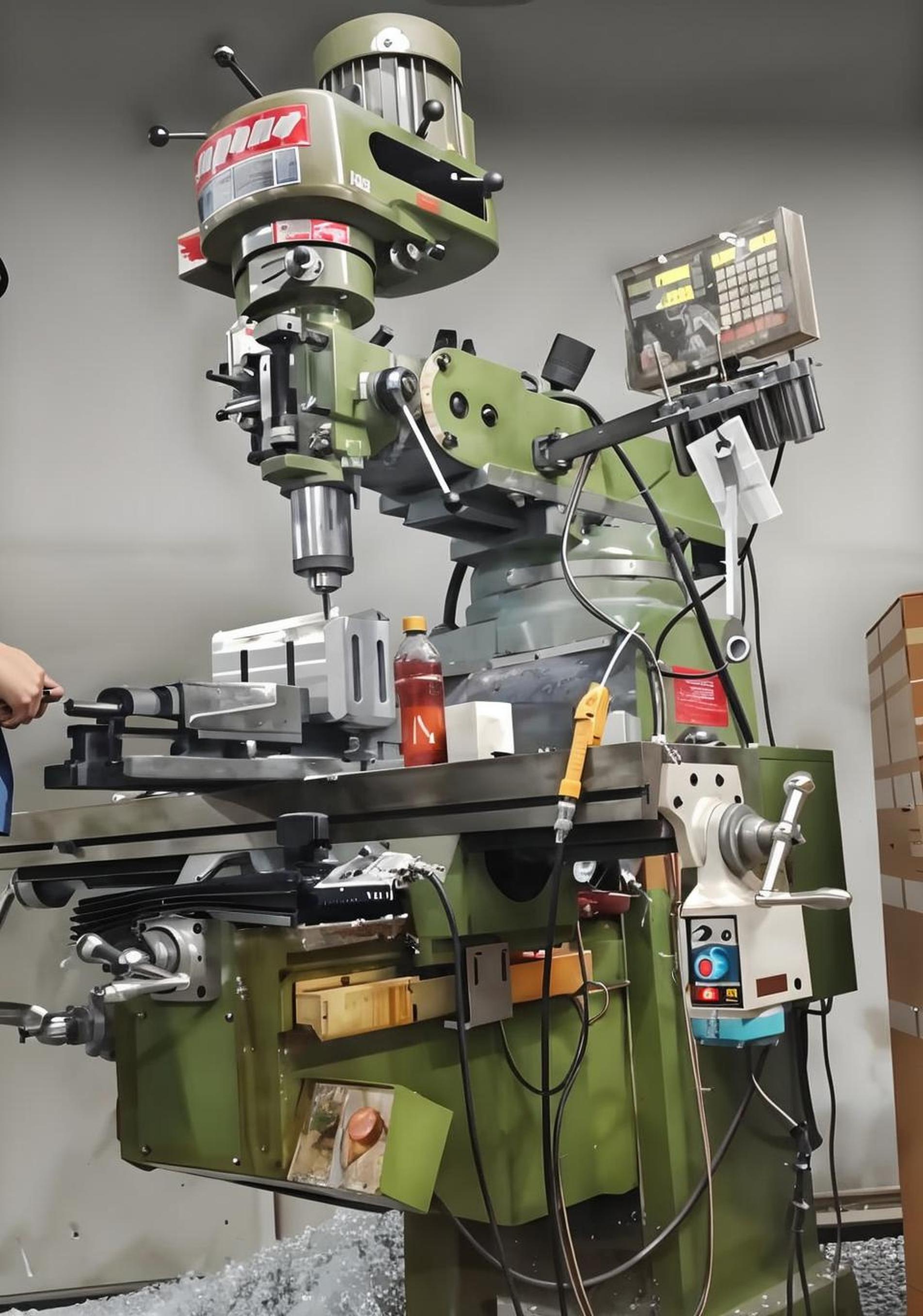
Manufacturing Process and Assembly Considerations
- Precision Requirements:
Dimensional errors affect resonance; horn length tolerance is typically within ±0.01mm. - Surface Finishing:
Polished surfaces reduce energy loss. Anodizing or coatings may be applied as needed. - Connection Methods:
Threaded joints, flanges, or monolithic machining are used to ensure alignment and rigidity. - Frequency Tuning:
Fine-tuning may involve adjusting end-face thickness or adding/removing balancing weights. 
Common Issues and Troubleshooting
- Frequency Drift:
May result from assembly error, material aging, or deformation. Requires retuning or component replacement. - Cracks or Damage:
Often occur at stress concentration points. Resolved by structural optimization or switching to a better material. - Insufficient Output Power:
Check resonance matching, connection tightness, and transducer condition. -

Typical Application Areas
- Plastic Welding:
Key component in ultrasonic welding machines, focusing energy on the weld joint. - Food Cutting:
High-frequency vibration reduces food adhesion and improves cutting efficiency and cleanliness. - Textile / Non-woven Fabric Welding:
Enables fast and clean bonding without adhesives or stitches. - Medical Device Manufacturing:
Micro-welding and plastic sealing require precision and stability. -

The ultrasonic horn is the heart of ultrasonic energy systems. Its design and fabrication involve multidisciplinary knowledge in mechanics, materials, and acoustics. With advancements in manufacturing and increasing application demands, ultrasonic horns will continue to evolve toward higher power, greater precision, and more compact designs. This article aims to offer theoretical guidance and practical insights for professionals in the field.


Products
CONTACT US
Sales manager: Lisa
Whatsapp/wechat:+08615006191865
Email:qjmachinery@gmail.com
COPYRIGHT © 2025 Wuxi Qijiang Precision Machinery Co., Ltd all rights reserved
