 Qijiang Precision Machinery
Service Center
 Whatsapp
Contacts
Contact
Lisa
Whatsapp
08615006191865
WeChat
08615006191865
Qrcode

Scan Whatsapp
Service Center


Qijiang
Precision Machinery

What is the difference between ultrasonic welding, friction welding, and pressure welding?
Time: 2023-11-13 09:11:13
Click:
Ultrasonic welding of copper tube is a metal welding technology that has some similarities with friction welding and pressure welding, but there are also some key differences. Here are some basic information about ultrasonic welding:
Ultrasonic welding principle: Ultrasonic welding utilizes the frictional heat caused by ultrasonic vibration to achieve metal connection. Ultrasonic vibration is usually above 20 kHz, transmitted to the surface of the workpiece through the welding head, causing local friction and heating the metal surface. The advantage of this method is that the welding time is short, the temperature is relatively low, and there is no need to use welding flux or filler materials.

Difference from friction welding: Although both ultrasonic welding and friction welding involve frictional heat, the vibration of ultrasonic welding is longitudinal, while friction welding is usually transverse. In addition, ultrasonic welding usually takes a shorter time to complete, while friction welding may take longer.
The main difference between ultrasonic welding and pressure welding is that the applied static pressure is relatively small. Ultrasonic welding typically uses lower static pressure, while pressure welding typically requires higher pressure. This helps to reduce the deformation of the workpiece and improve its accuracy.
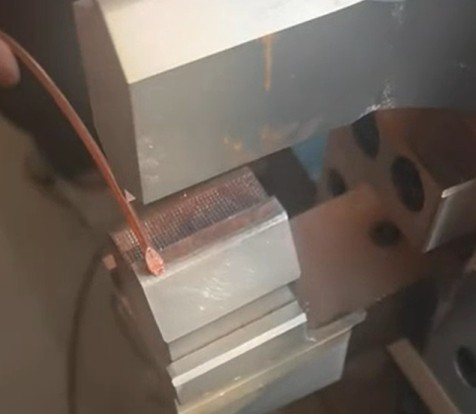
Welding process: During ultrasonic welding, the tangential vibration in the initial stage helps to remove oxides from the metal surface, and through the process of micro welding and destruction, the protruding parts of the rough surface are repeatedly connected and fractured. This increases the contact area, causing an increase in temperature in the welding area. Under the action of contact pressure, surface welding occurs when the metal surfaces are close to the distance at which atomic gravity can act.


Products
CONTACT US
Sales manager: Lisa
Whatsapp/wechat:+08615006191865
Email:qjmachinery@gmail.com
COPYRIGHT © 2025 Wuxi Qijiang Precision Machinery Co., Ltd all rights reserved
