 Qijiang Precision Machinery
Service Center
 Whatsapp
Contacts
Contact
Lisa
Whatsapp
08615006191865
WeChat
08615006191865
Qrcode

Scan Whatsapp
Service Center


Qijiang
Precision Machinery

Technical Insight: Ultrasonic Spot Welding for PP Corrugated Plastic Sheets
Time: 2025-07-07 09:31:24
Click:
Polypropylene (PP) corrugated plastic is a lightweight, impact-resistant, and moisture-resistant material widely used in packaging, signage, and logistics applications. However, its low surface energy poses a challenge for conventional bonding techniques, such as hot melt adhesives or mechanical fasteners. These methods often result in weak joints, reduced efficiency, or excessive material deformation.


Ultrasonic spot welding offers a highly effective, contact-based welding solution for PP sheets. It works by converting high-frequency electrical energy (typically 15kHz or 20kHz) into mechanical vibrations using a piezoelectric transducer. These vibrations are transmitted through a booster and horn to the material's surface, generating localized heat via intermolecular friction, which melts and fuses the plastic at the contact point.
Advantages:
No consumables required (glue, screws)

Fast welding cycle: typically<1 second per spot
Consistent weld strength
Localized heating with minimal thermal deformation
Clean and aesthetic weld appearance

Process Considerations:
Weld Horn Design: The horn must match the geometry of the PP corrugated surface. A custom contour ensures even pressure distribution and energy transmission.
Welding Parameters: Time, amplitude, pressure, and hold time must be finely tuned to avoid over-melting or incomplete fusion.
Material Thickness: Optimal welding results are achieved with PP sheets of 2–6mm thickness. For multi-layer bonding, dual-point welding horns may be used.
Joint Structure: Overlapping or flanged joints yield better weld integrity than edge-to-edge contacts.
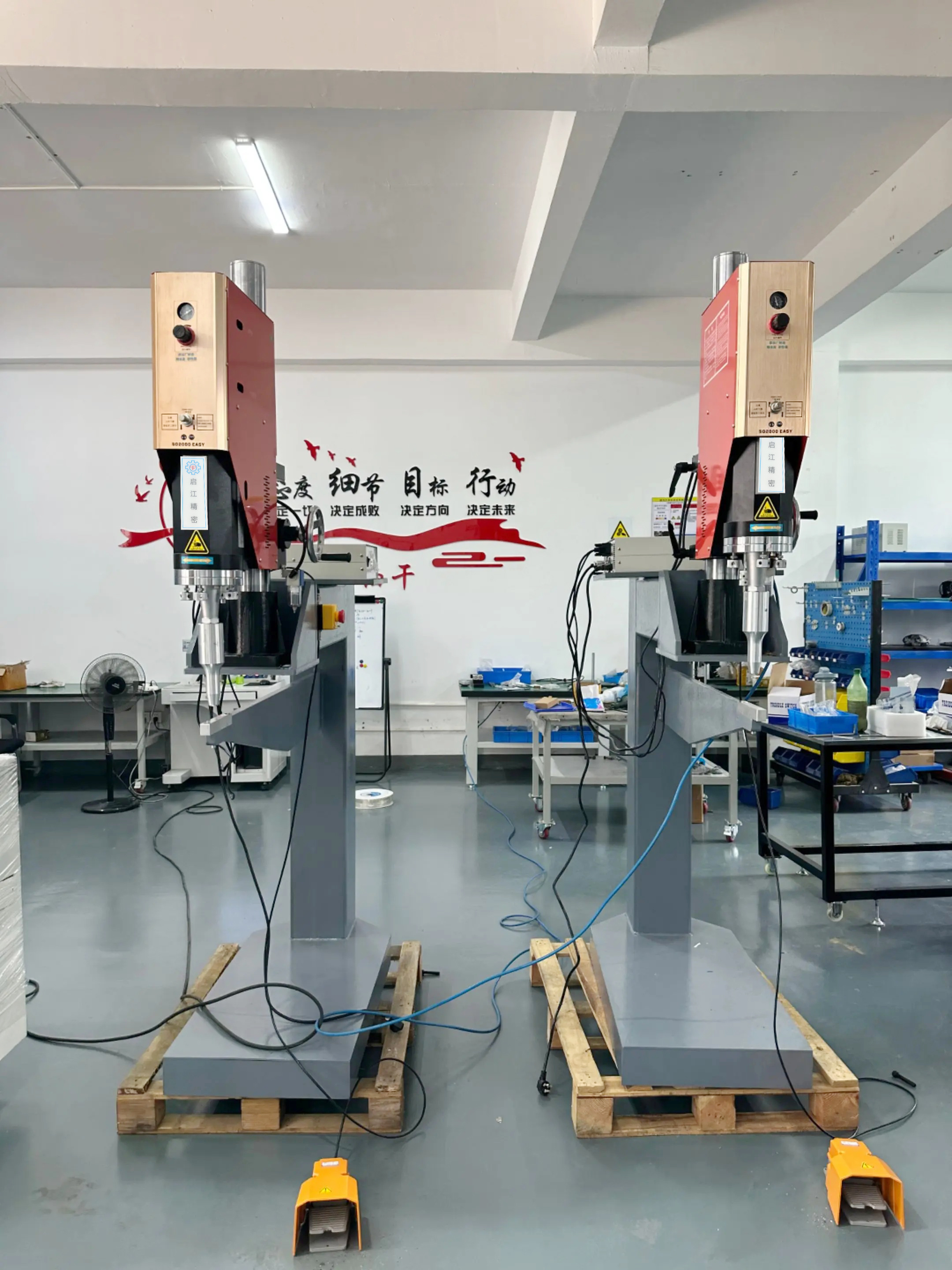
Qijiang Precision provides tailor-made ultrasonic welding solutions for corrugated plastic products, including custom horns, automated fixtures, and integration into production lines. Our machines are widely used in packaging box manufacturing, automotive separators, and logistics container assembly.


Products
CONTACT US
Sales manager: Lisa
Whatsapp/wechat:+08615006191865
Email:qjmachinery@gmail.com
COPYRIGHT © 2025 Wuxi Qijiang Precision Machinery Co., Ltd all rights reserved
